
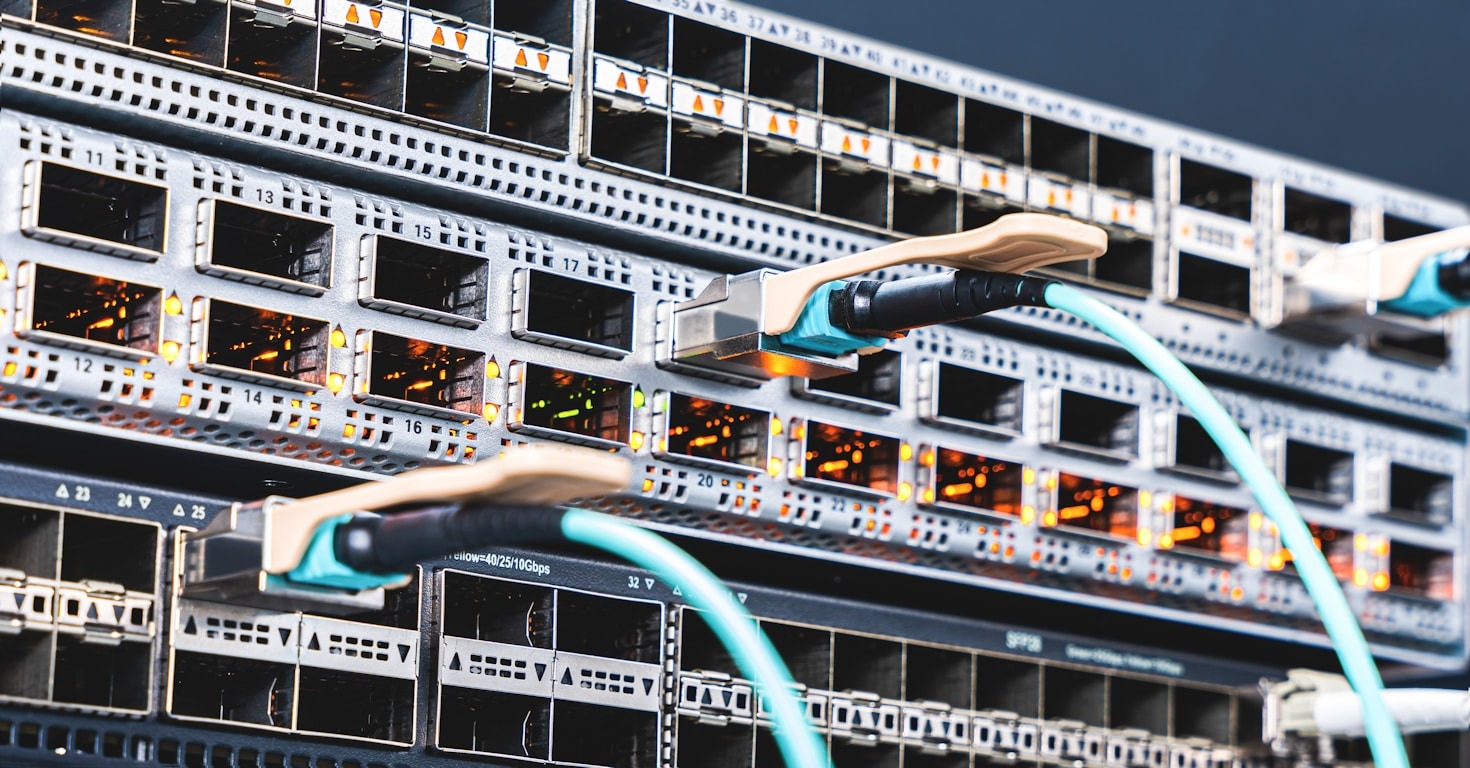
The artificial intelligence revolution isn’t just changing how we process data—it’s fundamentally reshaping the physical infrastructure that houses our computing power. Traditional data centers, designed for general-purpose workloads and conventional server architectures, find themselves increasingly mismatched to the demands of AI and machine learning operations. As organizations race to deploy AI capabilities, the question is no longer whether to customize data centers for AI, but how quickly and effectively they can make the transformation.
Customizing data centers for AI means fundamentally reimagining power delivery, cooling infrastructure, and network architecture to handle extreme densities and unique workload patterns, while simultaneously building in the flexibility to adapt as rapidly as AI technology itself evolves—transforming general-purpose facilities into specialized engines that balance today’s demanding requirements with tomorrow’s unpredictable innovations.
The Power Density Challenge
AI workloads have shattered conventional assumptions about power consumption. Where traditional servers might draw 5-8 kW per rack, AI-optimized configurations with high-density GPU clusters routinely demand 30-50 kW per rack, with cutting-edge deployments pushing toward 100 kW and beyond. This isn’t a incremental change—it’s a fundamental shift that renders traditional power distribution strategies obsolete.
Customizing for AI begins with power infrastructure designed from the ground up for these extreme densities. This means oversized electrical feeds, strategically positioned power distribution units, and busway systems that can deliver massive amperage directly to equipment rows. Floor space becomes secondary to power availability—an AI data center might have half the rack count of a traditional facility but consume twice the power.
Cooling: The Make-or-Break Factor
Traditional air cooling systems hit their limits well before reaching AI-level power densities. While creative approaches like hot aisle containment and optimized airflow can push air cooling to perhaps 20-25 kW per rack, serious AI deployments demand liquid cooling solutions. The physics are inescapable: water has roughly 3,500 times the heat capacity of air, making it the only practical medium for removing the thermal loads AI generates.
Customization for AI cooling takes multiple forms. Direct-to-chip liquid cooling delivers coolant directly to processors and GPUs, removing heat at the source with remarkable efficiency. Rear-door heat exchangers bolt onto rack backs, condensing heat extraction into compact form factors. Immersion cooling submerges entire servers in dielectric fluid, achieving the highest density cooling available while dramatically reducing fan energy. Each approach requires different facility infrastructure—from coolant distribution networks to heat rejection systems sized for concentrated thermal loads.
The strategic decision isn’t just which cooling technology to adopt, but how to implement it without orphaning existing infrastructure. Hybrid approaches that combine air cooling for traditional workloads with liquid cooling for AI clusters offer flexibility during transition periods, though they add complexity to facility management.
Network Architecture Reimagined
AI workloads communicate differently than traditional applications. Model training involves massive parameter synchronization across hundreds or thousands of GPUs, creating east-west traffic patterns that dwarf typical north-south data flows. Inference workloads demand ultra-low latency between processing stages. These requirements push network architecture in new directions.
Customizing for AI means deploying high-bandwidth, low-latency fabrics optimized for GPU-to-GPU communication. InfiniBand and proprietary interconnects like NVIDIA’s NVLink provide the multi-terabit throughput AI clusters demand. Network topology shifts from hierarchical designs toward spine-and-leaf or even flat architectures that minimize hop counts and latency variability. Packet loss that might be acceptable for web traffic becomes catastrophic when it disrupts tightly synchronized training operations.
Space Planning and Layout Optimization
AI infrastructure clusters differently than traditional workloads. Training clusters benefit from physical proximity to minimize interconnect latency, leading to dense pod architectures where hundreds of GPUs occupy contiguous floor space. This contradicts traditional data center layouts optimized for distributed, loosely coupled systems.
Customized AI facilities embrace pod-based designs where power, cooling, and networking are provisioned in concentrated zones supporting specific AI workload types. Rather than uniform rows of identical racks stretching across the floor, AI data centers might feature distinct neighborhoods—training pods with maximum density and interconnect bandwidth, inference zones optimized for low latency and high throughput, and development areas with more flexible configurations.
Storage Infrastructure Evolution
AI’s hunger for data reshapes storage requirements dramatically. Training modern large language models involves processing trillions of tokens, demanding storage systems that can feed data to GPUs at sustained multi-terabyte-per-second rates. Traditional storage arrays, designed for transactional workloads with random access patterns, struggle with AI’s sequential, high-throughput demands.
Customization means deploying parallel file systems like Lustre or GPFS that can aggregate bandwidth across dozens of storage nodes. NVMe-over-Fabric technologies eliminate protocol conversion overhead, delivering near-native SSD performance across the network. Storage tiering becomes crucial—fast NVMe for active datasets, high-capacity disk for model checkpoints and archives, with automated data movement between tiers based on training schedules and access patterns.
Reliability and Redundancy Reconsidered
Traditional data center design obsesses over eliminating single points of failure, building N+1 or 2N redundancy into every system. AI workloads challenge these assumptions. Large-scale training jobs include checkpoint mechanisms that save progress periodically—if hardware fails, you restart from the last checkpoint rather than losing everything. This fault tolerance at the application layer reduces the need for infrastructure-level redundancy.
Customizing for AI might mean accepting lower infrastructure redundancy in exchange for higher performance or density. Training clusters might run on N+0 power configurations, reinvesting the saved capital into additional compute capacity. The trade-off makes sense when application design already handles failures gracefully and when the cost of redundant infrastructure exceeds the business impact of occasional interruptions.
Future-Proofing for Accelerating Change
AI technology evolves at breathtaking pace. Today’s state-of-the-art GPU will be obsolete in two years. Inference techniques that seem cutting-edge now will be replaced by more efficient approaches. Customizing for AI means designing for continuous evolution rather than static optimization.
This requires infrastructure flexibility that traditional data centers rarely needed. Modular power distribution that can be reconfigured as density requirements change. Cooling systems with headroom for next-generation thermal loads. Network fabrics that can accommodate emerging interconnect standards. The most successful AI data centers aren’t optimized for today’s workloads—they’re designed to adapt to tomorrow’s unpredictable demands.
The Human Element
Perhaps the most overlooked aspect of AI data center customization is operational expertise. Managing liquid cooling systems requires different skills than air-cooled environments. Troubleshooting high-speed interconnects demands specialized knowledge. Optimizing GPU utilization involves understanding both infrastructure and AI frameworks.
Organizations customizing for AI must invest in training and recruitment, building teams that bridge traditional data center operations and AI/ML engineering. The facilities that excel aren’t just those with the best hardware—they’re those where operators understand AI workload characteristics well enough to optimize infrastructure in real-time.
Wrapping Up with Strategic Perspective
Customizing data centers for AI represents one of the most significant infrastructure challenges and opportunities of our era. The organizations that succeed won’t be those that simply purchase the latest GPUs and cram them into existing facilities—they’ll be those that holistically reimagine power, cooling, networking, and operations around AI’s unique demands.
The investment is substantial, but so is the potential return. AI capabilities increasingly define competitive advantage across industries. The data centers being customized for AI today will power the innovations that shape the next decade—from scientific breakthroughs enabled by massive simulations to personalized experiences delivered through sophisticated inference at scale.
The question isn’t whether your data center strategy should account for AI—it’s how quickly you can make the transition while maintaining operational stability and financial discipline. Start with pilot deployments that teach your organization what AI really demands. Build relationships with vendors pushing the boundaries of power delivery and cooling technology. Invest in the expertise needed to operate these sophisticated environments. And above all, design for flexibility, because the only certainty in AI infrastructure is that requirements will continue evolving faster than traditional planning cycles can accommodate.
The data centers being built and customized today will determine who leads and who follows in the AI-driven economy. Choose your customization strategy wisely.
Leave a Reply