
Artificial intelligence is rewriting the rulebook for data center design. The computational demands of training large language models and running inference at scale have exposed the limitations of traditional infrastructure. What worked for web servers fails catastrophically when confronted with GPU clusters consuming 50 kilowatts per rack and generating overwhelming heat loads.
The question facing the industry isn’t whether these trends will become standard practice, but how quickly organizations can adopt them before their existing infrastructure becomes a competitive liability rather than a strategic asset.
The data centers being designed today aren’t just accommodating AI workloads—they’re being architected from the ground up around AI’s extreme requirements. These emerging design trends represent the industry’s response to infrastructure challenges that have become urgent imperatives as AI deployment accelerates.
1. Liquid Cooling Becomes Standard, Not Exception
The most visible trend is the wholesale shift from air to liquid cooling. Physics dictates this transition—air cooling hits maximum practical limits around 50 kW per rack, while AI configurations routinely demand 50-100+ kW. Direct-to-chip liquid cooling is becoming the baseline expectation rather than exotic technology. Rear-door heat exchangers provide a bridge solution for transitioning facilities. Immersion cooling is moving from research to production for the highest-density clusters. The infrastructure implications are profound: coolant distribution systems, heat rejection capacity, and facility design all pivot around liquid cooling as the primary thermal management strategy.
2. Power Density Planning Reaches Unprecedented Levels
AI workloads have shattered assumptions about electrical infrastructure. Designing for 5-10 kW per rack made sense for general compute; AI demands planning for 50 kW as baseline with headroom to 100+ kW. This forces fundamental rethinking—from utility feeds sized for massive loads, to busway systems delivering high amperage directly to equipment rows, to rack-level distribution handling what entire rows once consumed. The trend extends to sophisticated monitoring and management systems that track consumption at granular levels, enabling dynamic load balancing and predictive capacity planning.
3. Network Architecture Optimized for GPU-to-GPU Communication
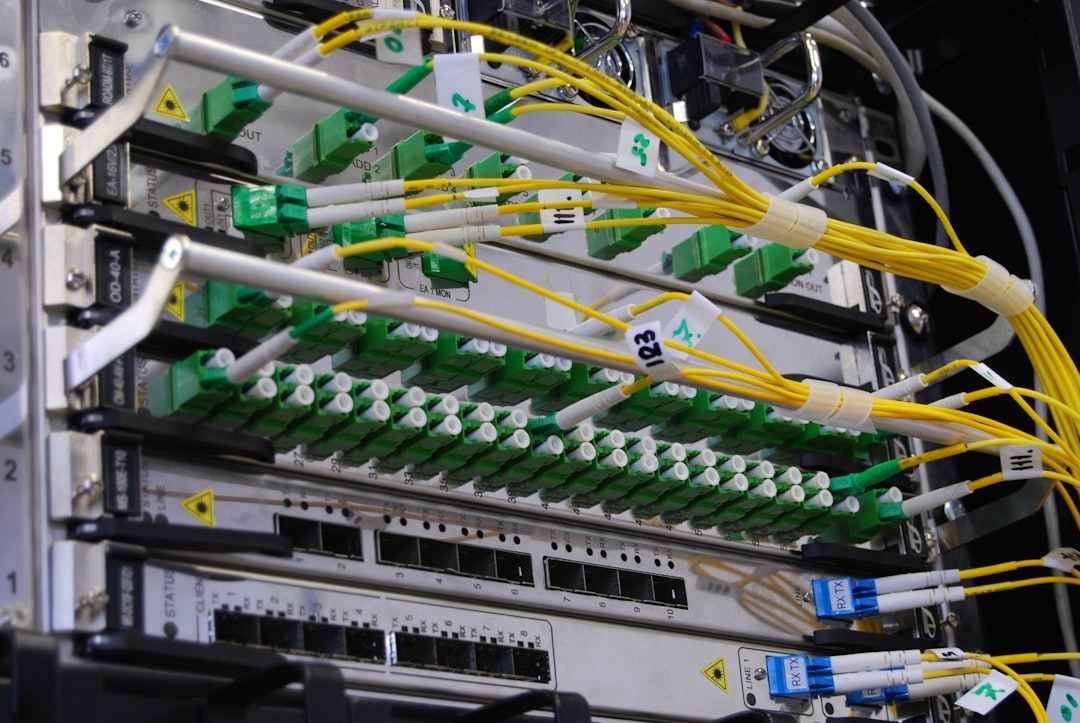
Traditional networks prioritize north-south traffic between servers and users. AI training generates massive east-west traffic as thousands of GPUs synchronize during model training. The trend is toward ultra-high-bandwidth, ultra-low-latency fabrics specifically optimized for GPU clustering. InfiniBand deployments are becoming standard. Network topology is shifting from hierarchical designs to spine-and-leaf or flat architectures that minimize hop counts. The critical insight: in AI workloads, network latency directly impacts training speed, making network performance as important as compute capacity.
4. Pod-Based Architecture Replaces Uniform Layouts
Uniform rows of identical racks are giving way to pod-based designs where infrastructure is optimized for specific AI workload types. Training pods concentrate maximum power density, liquid cooling capacity, and high-bandwidth interconnects where GPUs work in tight coordination. Inference zones prioritize low latency for production workloads. Development areas maintain flexibility for changing requirements. This recognizes that AI workloads aren’t homogeneous—different phases have dramatically different infrastructure needs, requiring specialized neighborhoods within the facility.
5. Modular and Prefabricated Construction Accelerates
The urgency around AI deployment is driving aggressive adoption of modular construction. Prefabricated electrical rooms, cooling systems, and complete data halls arrive as tested, integrated units deployable in weeks rather than months. This trend addresses both speed and complexity—factory-built modules undergo rigorous testing where issues can be corrected efficiently. The approach enables rapid iteration as vendors refine designs based on real-world experience, incorporating improvements faster than traditional custom construction allows.
6. Vertical Integration of Compute, Storage, and Networking
AI workloads drive trends toward tightly integrated infrastructure where compute, storage, and networking are co-designed rather than separate layers. Training clusters need storage feeding data to GPUs at multi-terabyte-per-second rates, pushing storage physically closer to compute. NVMe-over-Fabric eliminates protocol overhead. Parallel file systems aggregate bandwidth across nodes. AI performance depends on the entire stack working in concert—optimizing any single component in isolation creates bottlenecks elsewhere.
7. Flexibility and Future-Proofing Take Priority
Given AI technology’s rapid evolution, designs emphasize adaptability over current optimization. This means electrical infrastructure with capacity for next-generation demands, cooling systems with thermal headroom, and network fabrics that can integrate emerging standards. The recognition: an AI data center optimized perfectly for today will be obsolete in 18 months, while one designed for flexibility maintains value through multiple technology generations.
8. Sustainability Integration from Day One
AI’s enormous power consumption is forcing sustainability from afterthought to core design principle. Trends include on-site renewable energy, waste heat recovery redirecting thermal energy to useful purposes, and power management scheduling training during renewable availability. Liquid cooling’s efficiency advantages are leveraged for sustainability—higher coolant temperatures reduce chiller loads and enable more free cooling hours. Carbon tracking and reporting capabilities are becoming foundational elements.
9. Operational Simplification Through Automation
Managing liquid cooling, extreme power densities, and heterogeneous AI workloads is driving aggressive automation. AI-ready designs incorporate comprehensive monitoring tracking thousands of sensors. Machine learning is applied to facility management itself—predicting maintenance needs, optimizing cooling efficiency, and identifying anomalies before failures. Remote management reduces dependence on on-site expertise, critical given industry skills shortages.
10. Resilience Models Reconsidered
Traditional design obsessed over eliminating single points of failure through redundancy. AI workloads are driving trends toward application-level resilience that accepts infrastructure failures and manages them through checkpointing and job migration. This enables designs trading some infrastructure redundancy for increased performance—training clusters might run on N+0 power configurations. The trend reflects maturation of AI frameworks that handle hardware failures gracefully.
The Convergence Ahead
These trends are interconnected responses to AI’s infrastructure challenges. Liquid cooling enables higher power density. Pod architecture concentrates that density strategically. Network optimization ensures GPU collaboration. Modular construction accelerates deployment. Flexibility ensures relevance as technology evolves.
What emerges is a new paradigm where AI requirements drive decision-making from site selection through operations. The facilities being designed today look fundamentally different from those built five years ago—denser, more complex, more automated, and vastly more capable. For organizations planning AI infrastructure, these trends provide a roadmap. The data centers that will power tomorrow’s AI breakthroughs are being designed today.
Leave a Reply